We’ve just loaded this (audio, 17:21) onto our YouTube channel.
Month: June 2018
Furious men demand for WW2 video game to remove the option for players to fight as women soldiers because it is ‘rewriting history’
Our thanks to Mike P for this. The start of the piece:
A video game set in the Second World War has been accused of rewriting history by offering players the option to fight on the front line as a woman soldier.
The makers of Battlefield 5 insist they are being ‘inclusive and diverse’ by allowing gamers to play as a female soldier with a prosthetic arm.
But it has provoked a backlash among fans of the series, which has sold tens of millions of copies, who are choosing to boycott the latest version ahead of its release.
The row comes after the revelation by TV historian Dan Snow that he lies to his daughters about women’s roles in history, including telling them there were female Spitfire pilots, so they feel free ‘to follow their dreams’. [J4MB: What else would we expect from the son of arch-mangina Jon Snow?}
Collapse of the nuclear family should be applauded due to the ‘new reality’ of single and same-sex parents, says Sir James Munby, top family court judge
Our thanks to Elizabeth for this.
Oxford Men’s Group – information stall, Bury Knowle Park, Headington – TODAY
Our thanks to Michael Faraday, an Oxford-based MRA, for this. He writes:
Just letting you know that Fenton Beasley are I are running the Oxford Men’s Group information stall at Bury Knowle Park in Headington 1-4pm on Sunday 3rd June. We have leaflets about a variety of men’s issues and we shall also be playing The Red Pill documentary.
If any J4MB supporter were to find himself in the area, it would be much appreciated if he would pop by, say hello and give us his support.
Entrance is free and there is a beer tent.
The Headington Festival itself is a family event which showcases:
Stalls from local organisations
Sports teams, available for trials
Fire rescue & police emergency vehicles, available to explore Farm animals, available to pet.
Local food & ice cream, available to eat (at a price!)
Afternoon family entertainment in the park includes:
KC School of Dance
Selina & The Howling Dogs
Colonel Custard’s Magic Show
Stagecoach Performing Arts Headington
Colonel Custard & his Circus Skills
Jebb the Jester
Join us for an afternoon of frolics & fun in the sun!
Calling Residents/Workers of Nottinghamshire!
A study to asses the success of the introduction of misogyny as a hate crime in Nottinghamshire has been launched. The study has been commissioned by Nottingham Women’s Centre, is funded by the Office of the Nottinghamshire Police and Crime Commissioner and will be undertaken by Dr Loretta Trickett from Nottingham Trent University’s Law School, together with Professor Louise Mullany from the University of Nottingham.
The research includes an anonymous online survey, which the team are encouraging women and men to complete anonymously, as well as a number of focus groups with members of the public, focus groups with police officers and staff and individual interviews with women who have reported misogyny hate crimes to the police.
To apply to participate, submit your email address to: loretta.trickett@ntu.ac.uk
Spotify Angers #MeToo Crowd by Reversing Decision to Ban Artists Over Allegations of Abuse

Spotify have released an interesting blog post explaining why they have decided not to cave into #MeToo hysteria and ban artists from their playlists based on ‘artist conduct’ (or allegations of misconduct). They say: “We don’t aim to play judge and jury. We aim to connect artists and fans.”
Shaunna Tomas of UltraVoilet feminist advocacy group responded by publishing the following press release:
“Two weeks ago, Spotify declared that, ‘we want our editorial decisions—what we choose to program—to reflect our values.’ Now, we know exactly what those values are: profits over people, and music industry bigwigs over survivors of abuse.
“When music platforms promote abusers, they allow those abusers to reap in profits, lining their pockets in royalties and expanding their fan bases. This normalizes violence against women. Spotify’s values are now clear for all to see: Abusers take priority over survivors of their crimes. We will not forget their decision.”
‘Untreatable’ prostate cancer halted in some men by new immunotherapy drug, trial finds
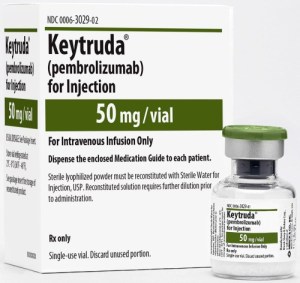
Good news in The Independent regarding an immunotherapy drug, Pembrolizumab, which has been trialed on 258 British men with prostate cancer and no remaining treatment options. 38% were still alive after a year and 11% had seen no growth in their tumours during the entire course of the treatment.
The Vikings are coming – new Icelandic men’s rights party launched
Two weeks ago I travelled to Iceland, along with Anthony Corniche III (“Tom”), to meet with Gunnar Thordarson, the leader of the new political party Karlalistinn (“Mens’ Rights”), and his colleagues. We believe Gunnar will be the first leader of a men’s rights party to be elected as an MP, in the 2021 general election. Our thanks to Tom for filming and editing this.
The Fight To Make Misogyny A Hate Crime
Three days ago, Vogue published an interview conducted by Amelia Abraham with Amelia Womack during a junket to Nottingham.
“It’s a grey afternoon when I meet Deputy Green Party Leader Amelia Womack in Nottingham, the first city in the UK to make misogyny a hate crime by law. Over the last six months, Womack has been tirelessly campaigning for this rule to apply to the rest of Britain, lobbying other politicians, and travelling up and down the country to talk about why it’s important.
“I think, sometimes, we let things slip away without addressing them,” she tells me. “It’s almost as though, walking down the street, we expect harassment.” [J4MB: translation from feminist into English- “It’s almost as though, being in public places, women expect some level of human interaction with male members of the public”].
While we have enshrined our condemnation of racism or homophobia in law, claims the politician, we are not treating sexism as the same kind of priority. Yet, ask any woman if she knows what Womack is talking about, and the answer is likely yes. According to statistics, 90% of British women experience street harassment before the age of 17 [J4MB: according to a survey by Hollaback! which they explicitly admit “cannot be generalised” as they survey was not distributed to a random sample of participants – more than 50% were previous visitors to their propagandist website. It is not entirely clear what constitutes harassment in this survey other than that the most common form is the – usefully conflated – “verbal and non verbal harassment”],and 85% of women aged 17-24 have been subjected to unwanted sexual advances [J4MB: according to a YouGov poll of 106 18-24 year old women commissioned by the End Violence Against Women Coalition who appear to have removed the results from their website… a BBC report on them is here. Clearly, this is a tiny sample that cannot be generalised. Furthermore, “unwanted sexual advances” is vague and subjective, probably behaviour that near-everyone could accept having experienced and engaged in at some point – and there is no record of the young women surveyed having been asked if they felt that they constituted meaningful incidents – or how they responded to the behaviour, which may have been telling].
Personally, at 33, Womack [J4MB: ‘claims that she’] has been slapped on the arse, grabbed in a club, and threatened with violence after a man told her to smile and she “gave him a dirty look”. But these were not the sole events that triggered her national campaign against misogyny [J4MB: do these feminists ever think of asking men whether they experience such behaviour from women? Perhaps they would find that their campaign should be against humans being a sexually reproducing species rather than “misogyny”]. In October 2017, she stood up at a Green Party conference and shared her haunting experiences of [J4MB: “alleged”] domestic violence [J4MB: according to this interview, she did not see fit to report her alleged abuse to the police…]. She sees the two issues as interconnected: “I thought, we need this law to show that you don’t have to wait to be physically abused before you can go to the police.”
A few days after Womack’s speech, #MeToo happened. Across the internet, thousands of women started posting about their experiences of misogyny, harassment and sexual assault. Womack was proud to see women speaking up, but worried that the movement didn’t change much: “After so many people had the bravery to scream from the rooftops, no one thought we would carry on as we were,” she says now, “but nothing much happened.” [J4MB: apart from forcibly extracted apologies, a charity event being cancelled and money for children’s hospitals being rejected, job losses and a suicide or two, or three. But yeah, nothing much…] For her, making misogyny a crime by law would be a way to ensure that future generations don’t have to go through another big movement like #MeToo.
Nottinghamshire became the first county in the UK to make the leap, back in April of 2016. The event I’m attending with Womack is a review of how things are going; a conversation between Police Commissioner Paddy Tipping and Helen Voce, who runs Nottingham Women’s Centre. They tell me they realised something serious needed to be done about street harassment after a group called Citizens Nottingham found that 38% of women reporting a hate crime explicitly linked it to their gender, and that one in five hate crimes that took place were reported.
The Women’s Centre held a conference, where Tipping asked women who had experienced misogyny to raise their hands [J4MB: great, another representative sample]. “Every woman without exception put her arm up,” he says gravely. “I’ve got daughters and granddaughters, I like to think I’m a feminist. I just thought, ‘people shouldn’t be treated like this’.”
Under the law, any crime or incident which is perceived by the victim, or any other person, to have been motivated by prejudice – in this case, misogyny – can be reported. Over two years, Nottinghamshire police have received one report every three days. From April 2016 to March 2018, there were 174 reports of misogyny hate crimes. But Helen tells me that women in Nottingham say they’ve been able to “walk down the street with their heads held higher” since the law was passed, and that it has made a lot of men realise the extent of the problem.
With these benefits, where is the resistance to the law being brought in nationwide? “I think there’s an assumption that it would take up police time on a trivial matter,” says Womack. However, Tipping maintains that this shouldn’t be a hurdle: “Do the police feel this is our top ranking issue? Perhaps not,” he says. “But we need to create a culture that says, ‘whatever the hate, it’s unacceptable’. When I talk to women in Nottingham, unanimously they say this is a statement; it’s about changing the standard.”
Tipping’s officers received basic training in how to deal with misogyny and reports are responded to with a simple conversation with the perpetrator where possible. There have been four arrests and one charge so far, which was sentenced with community service [J4MB: definitely not wasting police time then…].
Other parts of the country are starting to adopt similar laws, but not in the way that Tipping and Womack would like. Northamptonshire now recognise “gender-based hostility”, for example. “Some forces say that if you discriminate in favour of women you could be at risk, but I think it’s ultimately women who bear the brunt of this, which is why I’m keen to call it misogyny as a hate crime,” says Tipping [J4MB: feminism – about privileges, not equality].
Womack, meanwhile, wants the law to be brought about nationwide via a ruling from the Home Office so that there are no discrepancies between how a woman is treated from one county to another. In a bid to achieve this, she delivered a letter to Home Secretary Amber Rudd in February. It was signed by Labour MPs Harriet Harman and Jess Phillips, Liberal Democrat MP Jo Swinson and head of the Women’s Equality Party Sophie [J4MB: “doughnuts”] Walker, among others.
In explaining why misogyny should be a cross party issue, Womack compares it to same-sex marriage in that “one party does not have monopoly on knowledge or moral judgement, because these things affect too large a part of our population.”
This year she will also urge Mayor Sadiq Khan to use his power over the London Met to implement the law across the city; “he keeps talking about the fact that he is the feminist mayor and I feel like, if he wants his legacy to be in feminism, this is an opportunity to make sure of it.” [J4MB: …no comment!].
How can more people get involved, I ask, thinking of all the times I’ve been on the receiving end of violent and sexist language from a stranger. “Sign our petition, lobby your MP and your police commissioners,” Womack responds passionately. “And spread the message of what this law would mean. We can’t let the #MeToo movement die with the hashtag.”
~Our thanks to Steve for the link.~
Confessions of Macron’s equality minister Marlène Schiappa anger French feminists
A piece in today’s Times by Adam Sage:
Marlène Schiappa may be young and relatively inexperienced but she is a star of President Macron’s cabinet.
Largely unknown when she became gender equality minister last year, Ms Schiappa has led government action against discrimination, sexual violence and street harassment. In doing so she has become a household name.
Yet Ms Schiappa, 35, is also a mother struggling to reconcile the conflicting demands of work and home life, as readers of her fiercely controversial new book are discovering.
The work, which has been denounced as unfeminist and undignified by Parisian critics, recounts the sense of culpability that she said haunts her for leaving her two daughters, aged 6 and 11, to go to the office.
“I think that guilt is an intrinsic part of motherhood because we are permanently faced with conflicting demands,” Ms Schiappa told The Times. “Whatever you do, there are moments when we are not with our children, and that makes us feel enormously guilty.”
Si Souvent Eloignée de Vous (So Often Far From You) consists of letters she wrote to her daughters, mainly on trains and planes, to explain why she was away from home and is very different from the policy-ridden works that French politicians usually publish.
In one passage she tells of her mortification at discovering that a government meeting is planned on the day of her daughter’s school play. After much hang-wringing, she decides to go to the play, only to be ordered to attend the seminar, which she does while thinking of her children.
Such feelings may be known to working mothers across the world, but Ms Schiappa’s detractors were appalled to see them put into print by a government minister.
In a country that has traditionally placed a barrier between public and private lives, commentators said it was unbecoming for Ms Schiappa to divulge personal details, such as using her children’s shampoo so that she is reminded of them every time she smelt her hair, or her feeling of plenitude as she read a book in bed on the day after giving birth for a second time, or her gloom at her temporary separation from her partner.
“Should a secretary of state write that?” asked Le Monde. “Write it, why not? But is it necessary to publish it?” said the critic of L’Obs, the news magazine who added that the book made her feel ill at ease.
Ms Schiappa may be the voice of feminism in Mr Macron’s cabinet, but her work has earned the wrath of feminists outside it. Some criticised her for explaining that she had instructed her daughters to tell her when they started menstruating before telling their father. Others expressed anger with her for extolling the benefits of falling in love and of having children. Neither was a feminist concept, said some of France’s most die-hard feminists.
Ms Schiappa brushed aside the criticism. “I recount my journey through life in the book and how that journey is a kind of apprenticeship and an apprenticeship of what it is to be a feminist.”
She also defended publishing details of her private life, saying that the book fitted with Mr Macron’s commitment to change France’s tired political system.
“That does not mean changing the faces and doing exactly what they did before,” she said, adding that she wanted to add a human face and concrete examples to a traditionally arid political system. “I have had feedback from people who . . . like reading about women’s issues and issues of maternity but who are not necessarily politicised.”
She added: “My goal is to make other mothers feel less guilty, and to try to feel less guilty myself — although I don’t necessarily manage that.”
You can subscribe to The Times here.
 Justice for Men & Boys