An open email to Caitlin Moran, columnist, The Times, in response to her article about the forthcoming Irish abortion referendum

Caitlin Moran, 43, is a feminist columnist with The Times, to which I’ve subscribed for some years. I try not to read her pieces, because they always make me wish to cancel my subscription, and it’s a great paper if you can manage to avoid the articles penned by feminist journalists and columnists. On her Twitter account she introduces herself as:

Writing the fuck out of shit since 1992.

Ms Moran is possibly the most vacuous and narcissistic feminist “journalist” of her generation, and that’s saying something. In her bestseller How to be a Woman, Moran wrote about a family holiday in Cyprus (with their two daughters) during which she became pregnant because she and her husband couldn’t be bothered to use contraception. She subsequently had her unborn child killed, and mentioned in the book that it had been male. So, not human, then. We doubt that if it had been female, she would have mentioned its sex.

In two weeks’ time Ireland, a country very dear to my heart, will vote on whether to repeal the 8th Amendment and allow legal pregnancy up to the 12th week of pregnancy. I’m not religious, but if I were, I’d pray that the Irish people will vote NOT to repeal the 8th Amendment. In the UK women have killed 10+ million of their unborn children since the passing of the Abortion Act 1967. Every week in the UK, another 4,000+ unborn children are killed in what should be the safest place for them, their mothers’ wombs.

A piece by Moran in today’s Times, the highlighted comment towards the end (below) was what finally brought down the red mist, and prompted this blog piece. The woman has no moral compass – in former times she’s rightly have been denounced as evil – but of course the same could be said for all feminists. I shall be emailing her (caitlin.moran@thetimes.co.uk) to alert her to this blog piece. Her article:

The people who campaign against abortion, they must really respect motherhood. They must believe it is some kind of magic – that mothering is natural and easy, and that once a woman is prevented from seeking an abortion, she will slip into it capably, willingly and with grace. They must be so sure of this that they would create laws to stop her from terminating that pregnancy. Even if she was in an abusive relationship, or she herself was a child, or she had been told she would be terribly injured by the pregnancy and birth – they must believe that, however bad things get for this mother, she can overcome any adversity. They must believe women are incredible.

Incredible, but not clever. Not reasoning. Not able to analyse their own lives, make a decision that is in the best interests of them, their families and society as a whole. We know the statistics; we know the troubled people in our lives or making the headlines on TV. A mother who fails in mothering – who is traumatised, absent, ill or abused – is apt to raise angry, traumatised children, who in turn disrupt everyone around them.

“They were not mothered well,” we say of the destructive adult, the despairing adult, the self-loathing adult. “They did not have a good start in life.”

And yet there are countries where we do not allow mothers to wait until they can give their child a good start in life. We force them to carry to term babies they already know they will struggle to raise. We prevent them from getting older, wiser, healthier, more settled. We believe motherhood is a magic that will work anywhere; that a woman’s love, patience, time, sanity and money will, somehow, never really run dry. We believe that pregnant women are, in some way, superhuman.

But to believe that is not to be respectful to women and motherhood. It is to be utterly inhumane.

In two weeks, Ireland votes on whether to repeal the 8th Amendment and allow legal abortion up to the 12th week of pregnancy. Currently, Ireland has the most restrictive abortion laws in Europe – it is illegal to seek an abortion even if your pregnancy is the result of rape or incest. [J4MB: We doubt these crimes account for even 1% of unwanted pregnancies.]

It is a cruel and unusual punishment to tell someone who has been the victim of a crime [J4MB: 99%+ of these women were NOT the victims of a crime] that, as a consequence of that crime, they must now carry their attacker’s child to term, labour to deliver it and then raise it, or else give it up for adoption. Rape in Ireland is punished with an average ten-year sentence. By way of contrast, the woman or child the rapist attacked will have to spend the rest of her life wrestling with an emotional paradox that even the greatest philosophers and psychologists would struggle with: comprehending that your blameless, unknowing child is the product of sexual hatred.

It is a cruel and unusual stance for a country to take – to insist that its women must, legally, grit their teeth and cope with whatever a single crime or mistake hands them. [J4MB: Ah. Crime or “mistake”. There we have it. Mistakes including women’s failures to take responsibility. God forbid women ever have to face the consequences of their actions or inactions.]

For that’s what this vote is, at its very core, in its bones: whether it will allow its female citizens the right to say, “I tell you this, now, in all honesty – I cannot be a mother. I am too young. I am too old. I am too tired. I am too poor. I am too traumatised. I am too scared. I have been told it might kill me, and I wish to follow the advice of my doctors. [J4MB: I couldn’t be arsed, like Caitlin Moran, to use contraception when having sex with my husband on holiday, so now taxpayers must pay for my resulting unborn child to be killed.] Contrary to what all the banners say, I am not someone who is careless, blithe and dismissive of the potential for life. [J4MB: The evidence would suggest otherwise.] It is the exact opposite – I am someone who values it so highly that I tell you now, in all truth: I would not be able to do this job properly. It would be a risk, a gamble. I wish to resign, before the stakes rise too high. There is no magic in motherhood. That is a lie. Just a female human being, here, saying, I can’t do this. I don’t want to.”

The rejoinder to this is often, “But if this all seems too much, could you not just give birth – and then have the child adopted?”

But this, again, does not respect motherhood. To live the rest of your life knowing there is a child of yours out there, being raised by others. Fearing every day she might be misunderstood; that he wonders who you are; that she wonders why you did not wish to keep her. [J4MB: He or she would much rather be killed in the womb, than cause you any anxiety over your decision. Got it.] Again, only someone blithely disrespecting of motherhood – of the minds and hearts of women – could believe you could let a child go so simply. That you could be legally ordered to make a child, against your will, then give it to others – and that this would be preferable to a safe, legal medical procedure, practised in two-thirds of the world, with not a single recorded negative effect to those societies. [J4MB emphasis. 10+ million unborn children killed in the UK alone – not “negative effects”? OK. Got it.]

This is not a risky change Ireland considers this week. It does not face potential economic or social peril. It is a small consequence, really: to finally, properly, respect motherhood and women. [J4MB: It’s time to finally, properly, respect unborn children.]

But that is everything.

Our positions on abortion and Foetal Alcohol Syndrome are in our 2015 manifesto (pp. 5-8).

You can subscribe to The Times here.

Paul Elam unable to attend the July conference, on health grounds

I was contacted this afternoon by Paul Elam, and he later penned this email, which is published here with his permission:

Dear Mike,

I am writing to inform you, with regrets, that I will not be able to attend the upcoming ICMI18 in London this July. As you know from last year I have been dealing with some medical issues.  Nothing terribly serious, mind you, but which present multiple challenges for travel overseas.

I remain enthusiastic about the event, and I look forward to participating in any way I can from home. Please know that I will be there in spirit with you, J4MB, and all the speakers and attendees.

Regards,

Paul

We’re sorry Paul won’t be joining us, as will his many other admirers, but we wish him well with his medical issues. His presentation at the start of the conference will be by way of a pre-recorded video. Hopefully he’ll be able to attend ICMI19, wherever that is held.

Carole Howard, ex-Met police poster girl who cried racism, loses all 33 claims after tribunal heard she complained of prejudice whenever she was unhappy at work

Former Met Police firearms officer Carol Howard cried racism whenever if she did 'not like what is happening or is prevented from doing the work she choose', the tribunal concluded 

Our thanks to Mike P for this. The start of the piece:

A former police poster girl has lost a £144,000 race claim after a tribunal heard she had a tendency to complain of prejudice whenever she was unhappy at work.

Ex-Met officer Carol Howard accused her employer, the Independent Police Complaints Commission (IPCC) of discrimination and harassment.

But a tribunal concluded the 39-year-old would complain of victimisation ‘if she does not like what is happening or is prevented from doing the work she chooses’.

The hearing was told she lost her temporary job with the IPCC after falsifying timesheets and for poor performance.

I’ve been to hell and back, says tycoon John Caudwell in £17m battle

A piece by David Brown in yesterday’s Times:

The telecoms billionaire John Caudwell described yesterday how he had “been to hell and back” after a judge called his former righthand woman a remarkably unsatisfactory witness.

Nathalie Dauriac claimed that she was unfairly dismissed from the investment company she founded with Mr Caudwell and was offered a nominal £2 for shares that she calculated were worth £17 million.

A High Court judge ruled that the French-born wine heiress should receive £471,510 compensation for the shares she held in Signia Wealth.

Mr Caudwell, who made £1.5 billion from the sale of his majority stake in Phones4U in 2006, fell out with Ms Dauriac after alleging that she had fraudulently claimed £33,000 of expenses, including gifts and flights for herself, her then husband, and their children and nanny. Mr Justice Smith described Ms Dauriac, 40, as “combative, argumentative [and] prone to exaggeration”. He found that she “deliberately made expense claims that she knew were not proper claims” under the company’s rules.

Mr Caudwell, 65, said after the judgment: “Over the last three years I have been to hell and back as a consequence of a series of vindictive and completely baseless allegations made against me in the course of high-profile legal proceedings with . . . Nathalie Dauriac. She waged what felt like a campaign of terror in an effort to extort £20 million from me in the clear expectation that I would ultimately surrender and settle out of court. She was totally wrong in that assumption. I am delighted that Nathalie has been found by the judge to have been, in his words, dishonest, combative, aggressive and argumentative.”

The court was told that Mr Caudwell had put £700 million of his fortune into Signia Wealth. The judge described him as emotional but clear and articulate and said he had given reliable evidence despite suffering from Lyme disease, which can impair memory.

Ms Dauriac said yesterday that she had written to Lord Justice Vos, the chancellor of the High Court, to ask him to look into judicial attitudes towards professional women. She said: “During the trial there was also evidence showing that I and other female employees of John Caudwell were subject to written abuse by senior management. We were called many names, including ‘sociopath’ and ‘nasty bitch’.

“I am shocked that Mr Justice Smith should not consider this material to the case and I believe the judicial system needs to do more to ensure that women are protected from such abuse.”

You can subscribe to The Times here.
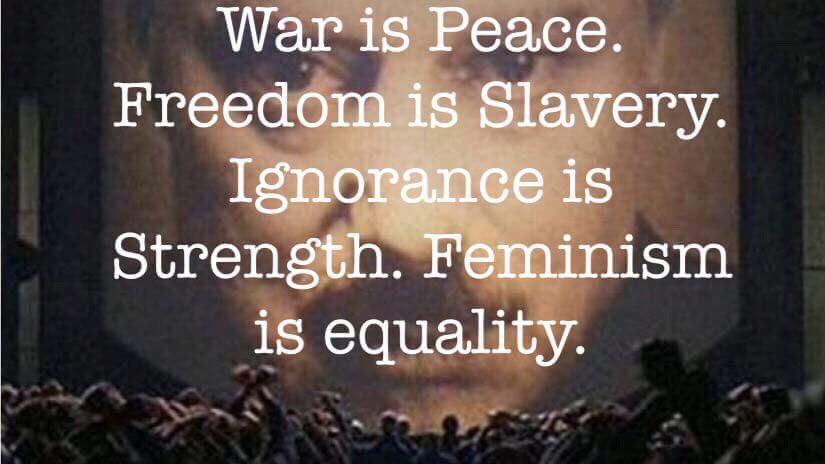
Cambridge University students demand new sex assault rules

A piece in today’s Times by Rosemary Bennett, Education Editor:

Cambridge University is considering a demand from students for it to lower the burden of proof in disciplinary cases amid claims that sexual predators are not being held to account.

More than 800 students have signed an open letter saying that the system “actively discourages” those affected from coming forward because of the high threshold. The university has previously admitted that it has a “significant problem” with sexual misconduct after almost 200 complaints.

At present the university relies on the criminal standard of proof — beyond reasonable doubt — for all disciplinary cases other than ones relating to fitness to study. Those seeking change say that the civil standard of proof — based on the balance of probabilities — should be enough.

Most complaints reported by students involved misconduct by fellow students. Cambridge has put more resources into measuring the scale of the problem than most universities.

The open letter to Stephen Toope, the vice-chancellor, says that “upholding a criminal standard of proof actively discourages survivors and victims of sexual harassment, rape and assault from engaging with the disciplinary procedure”. Students said that changing the system “will give survivors and victims of sexual assault more confidence to access it”.

They added that “by requiring cases to be proven ‘beyond reasonable doubt’, the university is implying that there is unlikely to be consequences for perpetrators in disciplinary cases pertaining to sexual misconduct, unless the survivor goes to the police”.

Students told Professor Toope that the criminal standard of proof placed “undue burden on someone who has experienced a traumatic event”. The letter was written by the Cambridge University Student Union Women’s Campaign. However, according to the student newspaper Varsity, the university committee in charge of discipline said it was unclear whether the letter represented the view of the broader student body.

The Office of Student Conduct, Complaints and Appeals (OSCCA) said that if “the student body wants the university to use the balance of probability as the standard of proof when considering allegations of student misconduct” then it “should be accepted by the university community”. However, it said that it was “unclear” whether this was “the view of the student body”.

The OSCCA has released a series of proposals to make the rules “clear and accessible” for students. Its consultation document noted the open letter to the vice-chancellor about changing the standard of proof.

In February the university released figures for sexual misconduct complaints after creating an anonymous reporting system, which has since been adopted by other institutions.

Of the 173 complaints 119 were allegations by students of misconduct by other students. Two students have made complaints about staff and seven staff members have complained about the actions of colleagues.

Graham Virgo, professor of English private law and pro-vice-chancellor for education at Cambridge, said at the time: “It supports our belief that we have a significant problem involving sexual misconduct — what we now need to ensure is that those who have been affected receive the support and guidance they need.”

The University of Cambridge declined last night to comment on the letter or the issues it raised, saying that it was engaged in a consultation process.

You can subscribe to The Times here.