Peter Goodman, Derbyshire chief constable, early 50s, tells The Derbyshire Male Voice Choir it must let women join

The Derbyshire Male Voice Choir has lamented political correctness after the area’s chief constable severed ties

Times caption: The Derbyshire Male Voice Choir has lamented political correctness after the area’s chief constable severed ties

A piece by Fiona Hamilton, Crime Editor, on the front page of today’s Times:

The push for gender equality has forced many men to change their tune. Now it has gone beyond golf clubs and dinner societies to target a male voice choir.

Members of the Derbyshire Constabulary choir decried political correctness yesterday after the area’s chief constable severed all ties with them.

Peter Goodman, who took over the force last summer, had told the choir to accept women or face losing its 60-year association with the police service. After concluding that a mixed group would take years to establish, the choir said that it would change its name later this year to the Derbyshire Community Male Voice Choir.

Kevin Griffiths, its chairman, accused Mr Goodman of trying to deflect attention from the force’s gender pay gap. “Derbyshire has the worst gender pay gap among police forces in the country, at 28 per cent,” he said. “But getting rid of the male voice choir is not going to solve that. I believe that we are a victim of political correctness.”

The choir was formed in 1956 and comprised police officers. It now accepts male singers from all backgrounds. The group kept strong links to the Derbyshire force, wearing police tunics from the 1960s and performing regularly at police events.

Mr Goodman, who is in his early fifties, said the force was an equal opportunities employer and was “committed to having an organisation where there are no enclaves where people from different backgrounds cannot go”.

Mr Griffiths, who also sings in a mixed choir, said members had considered it impossible to take on women as it would take years to find the balance. “We have 30 males and their voices are stronger because they’re bass and baritone. To get the right balance we’d need 50 females. That would probably take 10 to 15 years. We’d also need a complete library of new music. We offered to start a ladies’ choir who we could invite to perform at our events. But it was not an option for Mr Goodman.”

You can subscribe to The Times here.

Firms warned over gender pay gap

A piece in today’s Times:

Companies face unlimited fines over the gender pay gap as British employers were found to be paying men as much as five times more than women.

As a thousand bosses scrambled yesterday to meet a government deadline to provide staff pay details, Baroness Williams of Trafford, the equalities minister, warned companies that failed to produce a plan to reduce the pay gap about “unlimited fines”.

Last night about 10,000 employers had submitted figures as part of the government’s biggest exercise to determine the size of the pay gap, with at least 1,200 waiting until yesterday to submit data. Employers with more than 250 employees had until midnight to publish figures on the average pay of female staff compared with the average pay of male staff during 2017-18, using several data points.

The government was expecting 9,000 employers, from public and private sectors, to submit their data. Some 238 employers with fewer than 250 employees also submitted details.

The figures suggested that the gender pay gap may be lower than thought. Of 9,644 companies that had reported by yesterday afternoon, the average gender pay gap based on median hourly figures was 9.8 per cent (the percentage by which women are paid less than men). Last year official figures suggested that the median gap was 18.4 per cent, although this was based on a sample of individuals with no restriction on company size.

Companies were also asked for mean hourly earnings figures, which revealed an average pay gap of 14.5 per cent for those with 250 or more employees.

The Equality and Human Rights Commission (EHRC) will take action against companies that fail to submit their data — a requirement under the 2010 Equalities Act — or that fail to take action to reduce the gap. Companies were told to produce an action plan to achieve parity.

Yesterday Theresa May pledged to tackle the “burning injustice” of the gender pay gap. She wrote in The Daily Telegraph that “major injustices still hold too many women back”.

Government guidelines encourage employers to recruit in different ways; design jobs to be flexible; pay for work done rather than time in the office; increase pay for shared parental leave; introduce annual equal pay audits and sponsor career development.

Rebecca Hilsenrath, chief executive of the EHRC, said: “Targets will help employers track the progress they are making and put clear actions in place to achieve results.”

A wealth management fund, Hargreave Hale, was paying women 19p for every £1 a man earned, making women’s mean hourly rate 81.3 per cent lower than men’s. Coast, a fashion chain, was paying women 71 per cent less than men.

About nine in ten employers have a gender pay gap, analysis by The Timessuggests. The gap was worst in finance, at 26.6 per cent. Next was construction, at 21.3 per cent, and then arts, entertainment and recreation, at 19 per cent.

The industry with the lowest pay gap appeared to be transport, at 10 per cent. Aslef, the train drivers’ union, said that for train drivers, the gap was 0.7 per cent.

The 1,200 or so employers with no pay gap, or one that was in favour of women, included Mars, the food company, where women earned £1.52 for every £1 that men earned.

Analysis 
The gender pay gap is an issue across the world and it is getting worse (Tom Knowles writes).

In November last year the World Economic Forum said that when it came to earnings there hadn’t been “any real improvement over the last ten years and now things are moving in the wrong direction”. Last year the average annual earnings of women across the world was $12,000 but for men it was $21,000. At the current rate of change, the gap between men and women will not close for another 217 years.

A key issue in many European countries is the cultural and institutional treatment of women who have children. In Germany, which has Europe’s lowest share of families where both parents work full time, the pay gap is 21 per cent, significantly higher than the EU average of 16.2 per cent.

Iceland, which the forum has rated the most gender-equal country in the world, is the first to legally enforce equal pay. Within four years any company employing more than 25 people that does not pay equal wages for work of equal value will face daily fines. Meanwhile in Sweden there is a “daddy quota” of 90 days’ parental leave allocated solely to fathers. If the father does not take the time off work then the couple lose three months’ paid leave.

You can subscribe to The Times here.
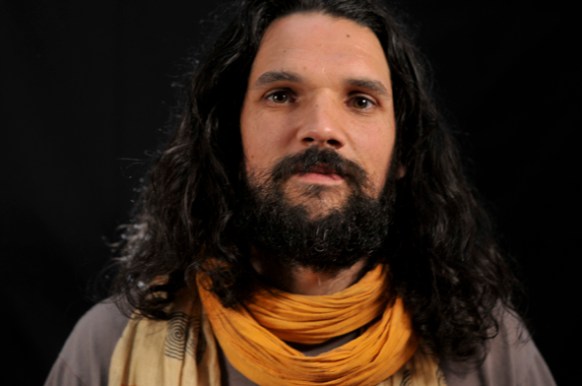
William Collins: Getting what you wished for

Excellent. Part of the piece consists of reflections on how companies might respond to demands to reduce the gender pay gap, including laying off large numbers of women in junior / administrative positions, and replacing them by men. The Times today published a piece including the following, it will be our next blog piece:

Baroness Williams, the equalities minister, warned companies that failed to produce a plan to reduce the pay gap about “unlimited fines”.

Feminism exists, because the Patriarchy ALLOWS it to exist

Most followers of this blog will be aware of Steve Brule’s wonderful video (1:41) (2013) of Big Red, a Canadian radical feminist, spouting on about patriarchy, in the presence of Dan Perrins, a bemused Canadian MRA. The video was recorded and edited by Steve Brule, and has attracted 305,000+ hits on our YouTube channel, along with 1,300+ comments. I just had to share the latest comment with you, from Ruben T, an American, I believe:

Whenever you’re confronted with a wild animal like this, let them try this on for size: Feminism exists, because the Patriarchy allows it to exist.

Darren Deojee, new conference speaker – “Positive Masculinity: Standing on the shoulders of giants”

We’re very pleased to announce a new speaker for the conference, Darren Deojee. I can’t recall when I last encountered a more impressive speaker. His profile on the speakers page:

Darren Deojee – “Positive Masculinity: Standing on the shoulders of giants”

Darren is an international teacher, speaker, activist, mentor/coach, father, and home educator of four children. He’s been teaching from the Toltec heritage of gender tradition for over 10 years and working with native gender for over 20 years. He works with groups, individuals, and couples on matters of gender and communication.

Karren Brady interviews Mike Buchanan about the gender pay gap

 Karren Brady with men's rights activist Mike Buchanan

I was recently interviewed by Karren Brady for her hour-long Channel 5 TV documentary, “Why do men earn more than women?” It was broadcast last night, and judging by the adverts before and during the programme, the target audience was predominantly women.

Karen and I had a filmed discussion of about two hours. Very little of the explanations I presented her with concerning gender pay gaps made it into the final documentary – not William Collins’s analysis, not Dr Catherine Hakim’s Preference Theory, published in 2000 – four out of seven British men are work-centred, but only one out of seven British women is. I presented the evidence of a causal link between increasing gender diversity on corporate boards, and financial decline, she ignored it and instead alluded to a 2016 Credit Suisse report which she believed showed a causal link with improved profitability, but didn’t.

The documentary is here, our discussion is between 26:57 – 30:33.